
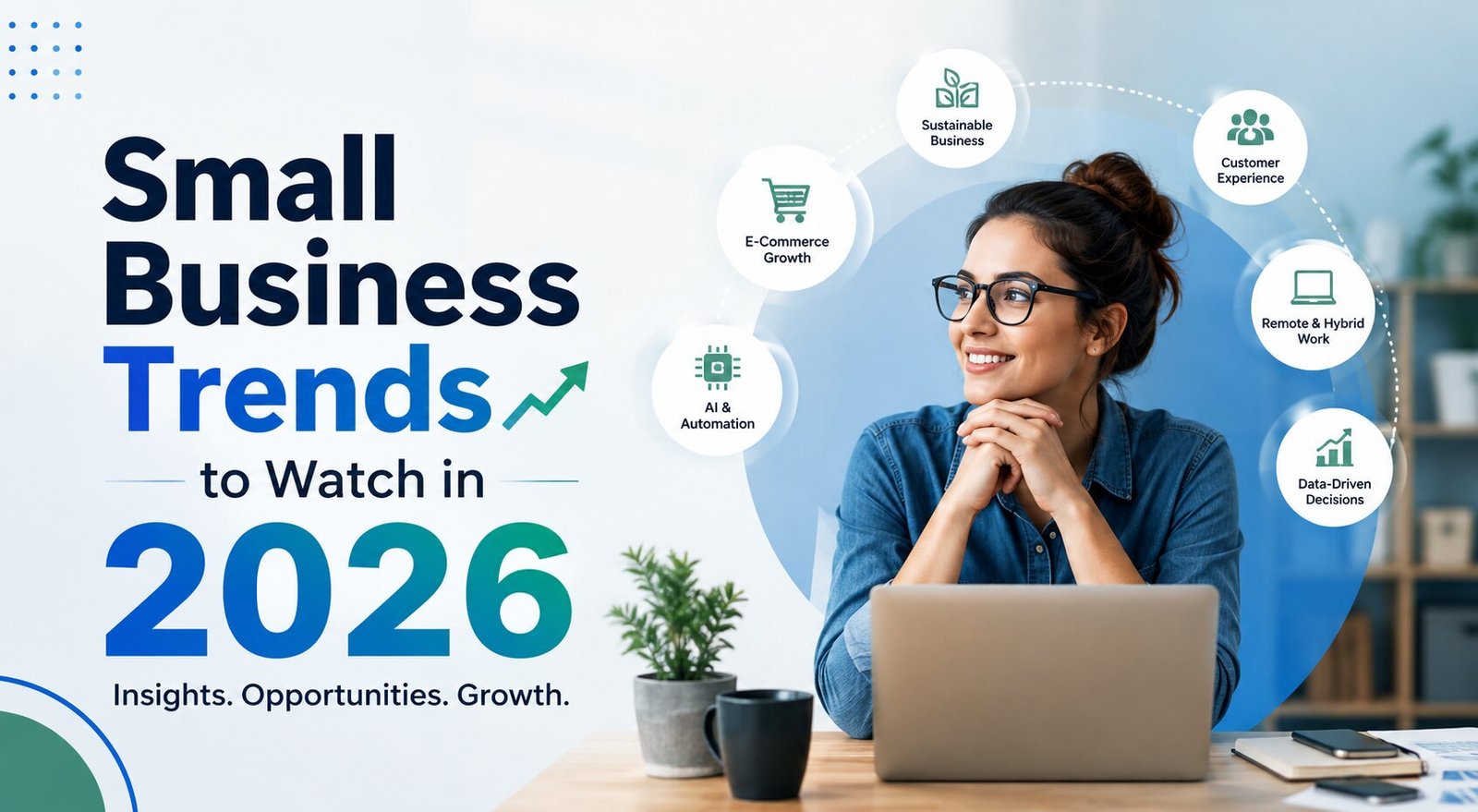
Running a small business in India has never been more exciting — or more competitive. Every year brings new tools, new customer expectations, and new ways of doing things, and 2026 is shaping up to be a turning point for entrepreneurs across the country. From tier-2 city startups to established family businesses going digital, everyone is asking the same question: what’s next?
Whether you are a small business owner, freelancer or just thinking about starting your own business, being familiar with the small business trends to look for in 2026 can help you make better decisions, save more money and grow your business quicker. In this piece we’ll cover some of the most important changes that are currently taking place, rather than buzzwords — real world trends that you can actually apply.
Why Keeping Up With Small Business Trends Matters
Small businesses form the backbone of India’s economy, contributing significantly to employment and GDP. But the market is changing fast.
Business owners who stay updated tend to:
- Spot new opportunities before competitors do
- Adapt marketing strategies to match changing customer behavior
- Save costs through smarter tools and automation
- Build long-term customer loyalty
With that in mind, let’s dive into the small business trends to watch in 2026 that are already reshaping how entrepreneurs operate across India.
1. AI Tools Become Everyday Business Assistants
Artificial intelligence isn’t just for big corporations anymore. In 2026, small businesses are using AI for everyday tasks like:
- Writing product descriptions and social media captions
- Managing customer queries through chatbots
- Analyzing sales data to predict demand
- Automating invoicing and bookkeeping
Why This Matters for Small Businesses
Many Indian entrepreneurs assumed AI tools were expensive or too technical. That’s changing quickly. Affordable, easy-to-use platforms now let even a one-person shop automate hours of manual work every week. This is one of the clearest small business trends to watch in 2026, since it directly affects time management and operating costs.
2. Hyperlocal and Regional Marketing Gains Ground
Big national campaigns are giving way to hyperlocal marketing — targeting customers based on their exact neighborhood, city, or regional language.
Some ways businesses are doing this:
- Running location-based ads on Google and Instagram
- Creating content in regional languages like Hindi, Tamil, Bengali, or Marathi
- Partnering with local influencers instead of national celebrities
- Listing on hyperlocal platforms and Google Business Profile
Customers increasingly trust businesses that “speak their language” — literally and culturally. This trend is especially strong in India’s growing tier-2 and tier-3 cities, where digital adoption is rising fast but preferences remain deeply local.
3. Sustainability Becomes a Selling Point, Not Just a Buzzword
Consumers, especially younger ones, are actively choosing brands that show real commitment to sustainability. In 2026, small businesses are responding by:
- Switching to eco-friendly packaging
- Sourcing materials locally to cut transport emissions
- Being transparent about sourcing and production
- Highlighting sustainable practices in marketing
A Practical Note
You don’t need a huge budget to appear sustainable — small, honest changes like reducing plastic packaging or supporting local suppliers can make a real difference to how customers perceive your brand.
4. Voice Search and Conversational Commerce
The number of Indians using voice search with their smartphones and smart speakers to search for local businesses, price comparisons and even to order goods and services is rising. In this change, the companies should:
- Optimize website content for natural, conversational language
- Focus on local SEO (“best bakery near me,” “affordable tailor in [city]”)
- Ensure business listings are accurate on Google Maps and other directories
Alongside this, conversational commerce — shopping through WhatsApp, Instagram DMs, and chatbots — is becoming a preferred way for Indian customers to browse and buy, especially in categories like fashion, food, and home decor.
5. Flexible and Remote-Friendly Business Models
The pandemic changed how people think about work, and that mindset has stuck. In 2026, small businesses are embracing:
- Hybrid teams working partly from home, partly from office or shop
- Freelancers and gig workers for specialized tasks like design or accounting
- Cloud-based tools that let owners manage operations from anywhere
This flexibility isn’t just about employee convenience — it also helps small businesses cut costs on office space and access talent beyond their immediate city.
6. Digital Payments and Financial Inclusion Deepen
UPI has already transformed how Indians pay for everyday goods and services, and in 2026, this trend continues to expand into new areas:
- Small vendors and kirana stores fully adopting digital payments
- Buy-now-pay-later (BNPL) options for higher-ticket purchases
- Easier access to small business loans through digital lending platforms
- Better credit scoring tools built specifically for micro and small enterprises
For entrepreneurs, this means fewer barriers to getting funded and faster, safer ways to collect payments from customers.
7. Personalized Customer Experiences at Scale
Customers today expect businesses to “know” them — their preferences, purchase history, and even their birthdays. Thanks to affordable CRM tools, even small businesses can now:
- Send personalized offers based on past purchases
- Segment customers for targeted email or WhatsApp campaigns
- Build loyalty programs that feel genuinely rewarding
Why Personalization Works
Personalized experiences build trust and repeat business — two things every small business depends on to survive and grow. It’s a subtle but powerful shift among the small business trends to watch in 2026.
8. Skill-Based Micro-Learning for Entrepreneurs
Business owners themselves are investing more in their own growth. Short, skill-focused online courses — on topics like digital marketing, GST compliance, or basic data analysis — are booming.
Instead of long MBA-style programs, entrepreneurs are choosing:
- 30-minute video lessons on specific skills
- WhatsApp-based learning communities
- Peer mentorship groups and local business networks
9. Focus on Mental Health and Work-Life Balance
Running a small business is demanding, and more entrepreneurs are openly prioritizing their mental well-being. This includes:
- Setting clearer boundaries between work and personal time
- Outsourcing tasks instead of trying to do everything alone
- Building support networks with other business owners
Healthier, less burned-out entrepreneurs tend to make better long-term decisions — which ultimately benefits the business too.
How to Prepare Your Business for These Trends
Adapting to change doesn’t mean overhauling your entire business overnight. Here’s a simple approach:
- Start small. Pick one or two trends most relevant to your industry and test them first.
- Track results. Use simple metrics — sales, customer feedback, website traffic — to see what’s working.
- Stay consistent. Digital marketing, local SEO, and customer personalization all take time to show results.
- Keep learning. Follow trusted business news sources and local entrepreneur communities to stay updated.
Conclusion
The small business trends to watch in 2026 all point toward one central idea: technology and human connection working together, not against each other. AI tools, digital payments, and personalization are making businesses more efficient, while hyperlocal marketing, sustainability, and mental well-being are keeping things grounded and customer-focused.
For Indian entrepreneurs, this is a genuinely exciting time. The tools are more affordable, the customer base is more digitally engaged, and the opportunities to stand out — especially by staying local and authentic — are bigger than ever. The businesses that thrive in 2026 will likely be the ones willing to experiment, adapt, and keep the customer experience at the heart of everything they do.
Frequently Asked Questions (FAQs)
What are the biggest small business trends to watch in 2026?
Some of the biggest trends include AI-powered business tools, hyperlocal marketing, sustainable practices, voice search optimization, and growing adoption of digital payments across India.
How can small businesses in India use AI without a big budget?
Many affordable, easy-to-use AI tools now handle tasks like customer support chatbots, content writing, and automated invoicing, making AI accessible even for very small teams or solo entrepreneurs.
Why is hyperlocal marketing important for small businesses in 2026?
Hyperlocal marketing helps businesses connect with nearby customers through regional language content, local SEO, and community-based promotions, which builds trust and drives more relevant foot traffic or online engagement.
Is sustainability really important for small businesses, or is it just a trend?
Sustainability is becoming a genuine customer priority, especially among younger buyers. Small, honest changes like eco-friendly packaging or local sourcing can meaningfully improve brand perception and customer loyalty.
How can a small business owner start adapting to these 2026 trends?
The best approach is to start small — choose one or two relevant trends, test them, track results using simple metrics, and gradually scale up what works best for your specific business and audience.