
Most of us are looking for a health routine that doesn’t cost money, doesn’t need a gym membership, and doesn’t demand hours of our already packed day. As it turns out, one of the simplest habits you can build is also one of the most powerful: walking.
You don’t need fancy shoes, a personal trainer, or a treadmill. All you need is thirty minutes and a decent pair of sneakers. Whether you’re strolling through a park in Bengaluru, walking along Marine Drive in Mumbai, or simply pacing around your society in the evening, the benefits of walking 30 minutes a day are backed by real science and real results.
In this article, we’ll break down exactly why this small daily habit can lead to big changes in your body and mind.
Why Walking Deserves a Spot in Your Daily Routine
People don’t realize the impact walking can have on them, because it seems too easy. It is actually the simplicity that makes it so effective over time. Walking is a low-impact activity, it’s not as difficult as high-intensity exercise, and it doesn’t harm your joints. This will increase your chances of sticking to it, which is key to long-term fitness and weight management. This regular walk will keep you active without leaving you tired, or at risk of harm.
Let’s look at the top daily walking benefits that make this habit worth adopting today.
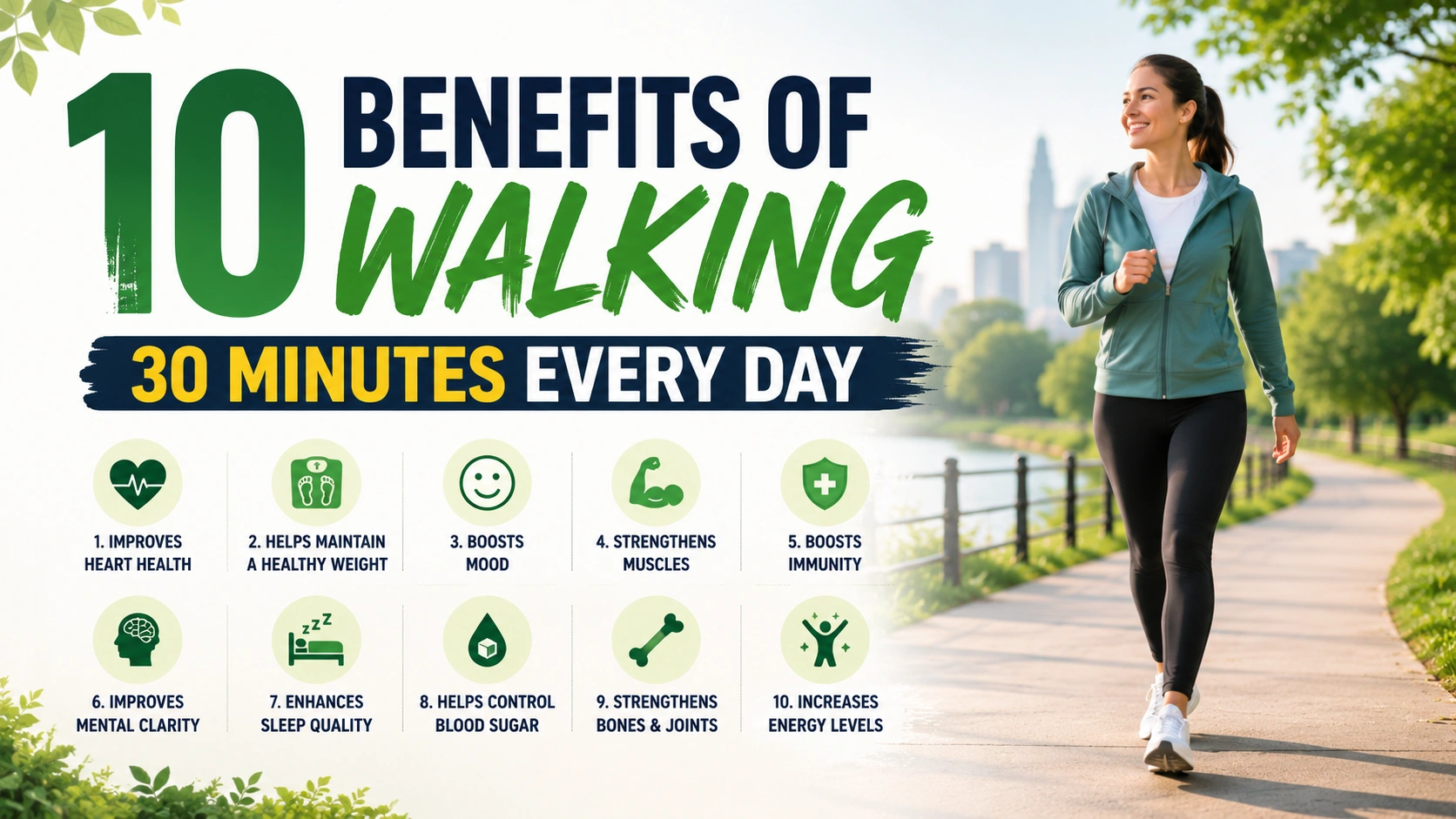
1. Supports Healthy Weight Loss
One of the biggest reasons people start walking is weight management. Walking for weight loss works because it burns calories steadily without putting excess strain on your body.
- Between 150-200 calories can be burned in a 30 minute brisk walk depending on your pace and body weight.
- It boosts your metabolism throughout the day.
- Combined with a balanced diet, consistent walking can help you lose stubborn belly fat over time.
The key is consistency. A daily walk, done regularly, often produces better long-term results than occasional intense workouts.
2. Strengthens Your Heart
The heart is a muscle and just like any other muscle, it has to be used if it’s going to be strong. Walking helps to increase blood flow, reduce bad cholesterol (LDL) and increase good cholesterol (HDL).
Regular walking has been linked to:
- Lower blood pressure
- Reduced risk of heart disease
- Better overall cardiovascular endurance
For a country like India, where heart disease rates are rising due to sedentary lifestyles and stress, this simple habit can make a real difference.
3. Helps Control Blood Sugar Levels
If you’re concerned about diabetes or already managing it, walking is one of the easiest ways to keep blood sugar levels in check. A short walk after meals helps your muscles absorb glucose more efficiently, reducing sugar spikes.
This is especially useful for people with a family history of diabetes, which is common across many Indian households.
4. Boosts Mental Health and Reduces Stress
Walking isn’t just good for the body — it does wonders for the mind too. A daily walk releases endorphins, the body’s natural mood boosters, which help fight stress, anxiety, and mild depression.
How Walking Helps Mentally:
- Clears your mind and improves focus
- Reduces cortisol (the stress hormone)
- Gives you time to reflect or simply switch off from screens
Many people find that a walk after a long work-from-home day helps them mentally “close” work and feel more relaxed in the evening.
5. Improves Sleep Quality
Having trouble sleeping at night? Regular walks will help maintain your body’s rhythm, allowing you to sleep more deeply and to fall asleep more easily. Walking helps to lower stress levels and it also releases the tension in the muscles, so your body is already primed for a deeper, more restful sleep.
6. Strengthens Muscles and Bones
Walking may seem light, but it engages multiple muscle groups, including your calves, thighs, glutes, and core. Over time, this leads to better muscle tone and stronger bones.
For older adults, walking is particularly valuable because it:
- Reduces the risk of osteoporosis
- Improves balance and coordination
- Lowers the chances of falls and fractures
7. Boosts Immunity
Moderate exercise, such as a 30-minute walk, has been shown to boost the immune system. It helps your body to get rid of common infections, such as colds and flu that are more successfully combatted by increased circulation of immune cells in the body.
8. Increases Energy Levels
It might sound strange, but moving more actually makes you feel less tired. Walking improves oxygen flow and circulation, which gives your body and brain more energy throughout the day. Instead of reaching for another cup of chai for an energy boost, try a short walk instead.
9. Improves Digestion
If you’ve ever heard elders in Indian households insist on a walk after dinner, there’s real logic behind it. Walking stimulates the digestive system, helping food move through your intestines more smoothly. This can reduce bloating, constipation, and general digestive discomfort.
10. Enhances Longevity and Overall Quality of Life
Perhaps the most compelling reason to walk daily is simple: it helps you live longer and live better. Multiple health studies associate regular walking with a lower risk of premature death, better joint health, and improved independence as you age.
Walking 30 minutes a day isn’t about becoming an athlete — it’s about giving your body consistent movement so it can function at its best for years to come.
How to Make Walking a Daily Habit
Whether you are trying to build a habit or change an unwanted one, some strategy is needed. Here are a few tips to keep in mind:
- Walk together at the same time every day, in the morning, evening or after eating meals.
- Get a walking partner (family, friends or neighbour).
- Track steps and get motivated with a fitness tracker or phone app.
- Go slow – even 10 minutes can become 30 minutes.
- Select safe, pleasant paths: park, gardens or quiet streets.
Read More:- Morning Habits for Better Health
Frequently Asked Questions (FAQs)
Q.1 Is walking 30 minutes a day enough for weight loss?
Yes, walking 30 minutes a day can support weight loss, especially when combined with a healthy diet. It helps burn calories consistently and boosts metabolism over time.
Q.2 What is the best time to walk for maximum benefits?
Both morning and evening walks offer benefits. Morning walks boost energy and metabolism, while evening walks help with digestion and stress relief. Choose the time that fits your routine best.
Q.3 Can walking help reduce belly fat?
Walking alone won’t spot-reduce belly fat, but regular walking combined with a balanced diet can reduce overall body fat, including around the belly area.
Q.4 How many steps equal a 30-minute walk?
On average, a 30-minute walk covers around 3,000 to 4,000 steps, depending on your walking speed and stride length.
Q.5 Is walking better than running for beginners?
For beginners, walking is generally safer and easier on the joints compared to running. It builds a solid fitness foundation before progressing to more intense workouts.