
Picture this: a customer places a heavy chain on your counter and says it’s 22 carat. You can’t melt it, scratch it, or cut it open. You need an answer in seconds, and you need to be right.
This is where a spectrum gold testing machine in India earns its place. Jewellers, pawn lenders, refiners, and bullion dealers across the country now rely on spectrometers to check gold purity quickly and without damaging the item. If you are thinking of buying one, this guide covers how these machines work, what to look for, and the mistakes to avoid.
What Is a Spectrum Gold Testing Machine?
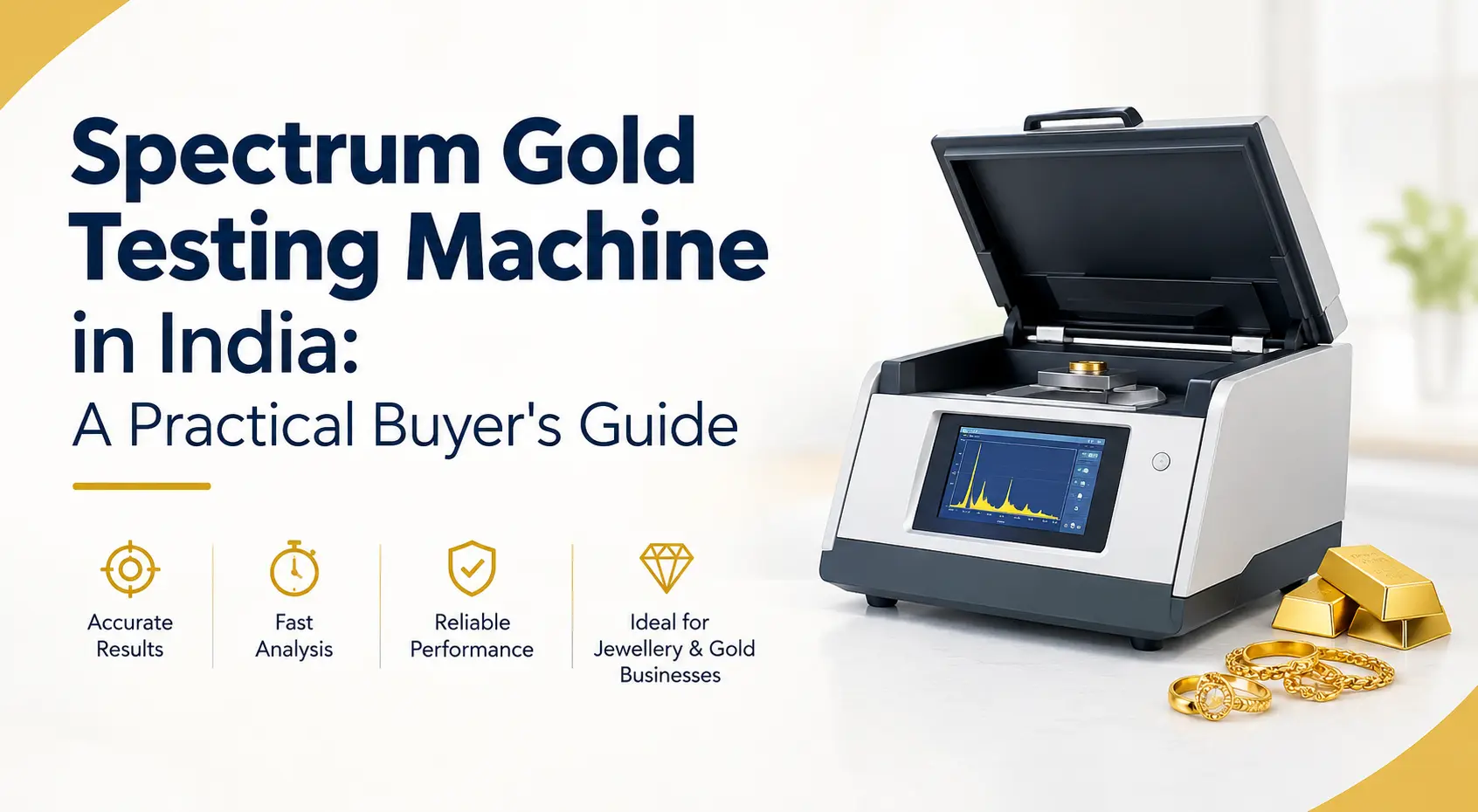
A spectrum gold testing machine is a device that measures the metal composition of a piece of jewellery or bullion using light or X-rays. Most models use X-ray fluorescence (XRF) technology. The machine fires a beam at the surface of the sample, and each metal inside it responds with a unique energy signature. The software reads those signatures and shows the percentage of gold, silver, copper, zinc, and other elements.
The result usually appears as a purity percentage, a karat value, or both, within a few seconds.
How It Differs From Traditional Testing
Older methods are still around, but they come with limits:
- Touchstone and acid testing: Depends heavily on the tester’s skill and only checks the surface.
- Fire assay: Very accurate, but it destroys the sample and takes time.
- Electronic touch testers: Quick, but not always reliable on plated or alloyed items.
A spectrometer gives you lab-style accuracy without damaging the piece, which is why it has become a standard tool in the trade.
Why Demand Is Growing in India
India is one of the leading markets of gold in the world and gold buyers are very cautious about the purity of the gold. This is being driven by a number of factors:
- BIS hallmarking rules: Mandatory hallmarking and HUID (Hallmark Unique Identification) have made purity verification a daily concern for retailers.
- Rising gold prices: Even a small purity error can mean a big loss on a single sale.
- Gold loan growth: Banks and NBFCs need fast, reliable checks before lending against ornaments.
- Customer trust: Showing a printed or on-screen report builds confidence and helps close sales.
For a small jeweller in a town or a large showroom in a metro, a gold purity testing machine is no longer a luxury. It protects margins and reputation.
Key Features to Look For
Not every machine suits every business. Here is what actually matters when comparing options.
1. Accuracy and Repeatability
Check the stated accuracy, which is often around ±0.1% for good XRF units. Better still, ask for a live demo and test the same sample several times. The readings should stay consistent.
2. Testing Speed
Most machines give results in 5 to 30 seconds. If you test dozens of items every day, speed makes a real difference to your workflow.
3. Detectable Elements
A good gold analyser should identify gold, silver, copper, zinc, nickel, cadmium, and platinum-group metals. Cadmium detection is especially useful for catching unsafe solder.
4. Software and Reporting
Look for a clear interface, easy calibration, and the option to save or print test reports. Some models also support Hindi or regional languages, which helps staff at the counter.
5. Sample Handling
Consider whether you will test small rings, chains, coins, or large bars. Check the size of the testing chamber and whether it can handle irregular shapes.
6. Safety Certification
XRF machines emit low-level radiation, so shielding and safety interlocks are essential. Make sure the supplier provides the required safety documentation and follows the guidelines set by India’s atomic energy regulator.
Understanding Price Factors
There is great diversity in prices depending on features, brand and technology. But don’t just go for the lowest price, consider the factors that influence that price:
- Detector type and X-ray tube quality
- Number of elements the machine can analyse
- Built-in calibration and software features
- Brand reputation and import or local manufacturing
- Warranty length and after-sales support
Entry-level units cost much less than premium lab-grade analysers, but a cheap machine that gives unreliable readings can cost you far more in disputes and losses. Always request a written quotation that lists what is included.
Tips for Choosing the Right Supplier
Buying a spectrum gold testing machine in India means building a long-term relationship with your supplier. Keep these points in mind:
- Ask for a live demonstration using your own samples, including a known hallmarked piece.
- Check service coverage. Will an engineer visit your city, or must you ship the machine away?
- Confirm calibration support. Machines need periodic calibration against certified reference samples.
- Read the warranty carefully. Look at what it covers, especially the X-ray tube and detector.
- Talk to existing users. Other jewellers will tell you the truth about reliability.
- Verify spare parts availability so downtime stays short.
Common Mistakes Buyers Make
Many first-time buyers run into the same problems:
- Choosing purely on price without comparing accuracy.
- Ignoring surface condition. Plated or heavily polished items can mislead any machine if not handled properly.
- Skipping regular calibration, which slowly erodes accuracy.
- Placing the machine in a dusty, humid, or unstable spot.
- Not training staff, so readings get misinterpreted.
Avoiding these keeps your equipment reliable for years.
Getting the Best Results Every Day
A few simple habits make your testing more dependable:
- Clean the item before testing.
- Test at more than one point on larger pieces.
- Run a reference sample at the start of each day.
- Keep the machine on a stable surface, away from vibration.
- Record results for important or high-value transactions.
Conclusion
A spectrum gold testing machine in India is a smart investment for anyone who buys, sells, lends against, or refines gold. It delivers fast, non-destructive, and trustworthy results, which protects your profit and strengthens customer confidence in a market where trust matters most.
Focus on accuracy, safety, service support, and a real demonstration rather than just the price tag. Do that, and your machine will pay for itself many times over. For more business guides and equipment insights, explore Top Business Magazine.
Frequently Asked Questions
How accurate is a spectrum gold testing machine?
Good XRF-based machines are typically accurate to around ±0.1% on homogeneous samples. Accuracy depends on calibration, sample surface, and machine quality.
Can it detect gold-plated or fake jewellery?
Yes, to a degree. Because XRF reads the surface and a shallow depth, it can flag plating, but very thick plating may need additional checks such as cutting or density testing.
Is a spectrum gold tester safe to use?
Yes, when it is certified and used as directed. Modern machines have shielding and safety interlocks that keep radiation exposure very low. Always follow the manufacturer’s instructions and local regulations.
Does a spectrometer replace BIS hallmarking?
No. A spectrometer is a testing tool for quick internal checks. BIS hallmarking is an official certification done at recognised hallmarking centres, and it is mandatory for covered jewellery in India.
How often should the machine be calibrated?
Run a daily check with a known reference sample, and schedule professional calibration as your supplier recommends, usually every few months or after any major movement or repair.