
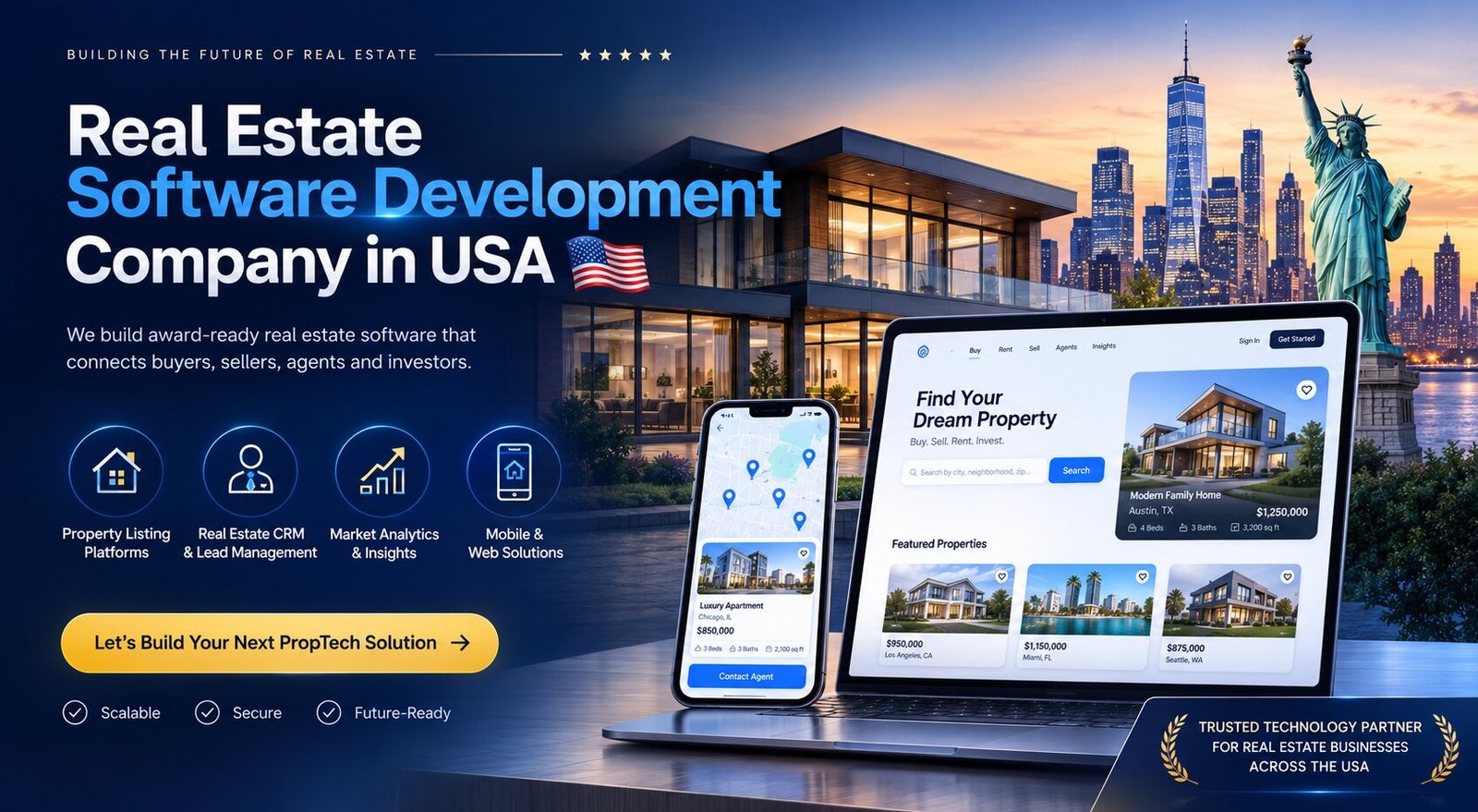
The real estate industry has changed dramatically over the past few years. Buyers expect virtual tours before they even schedule a visit. Agents rely on CRMs to manage hundreds of leads at once. Property managers use automated platforms to handle everything from rent collection to maintenance requests. Behind all of this technology sits one critical decision: choosing the right real estate software development company in USA to bring these ideas to life.
Whether you’re a proptech startup, a brokerage looking to modernize operations, or a property management firm wanting custom tools, this guide will help you understand what to look for, what to expect, and how to make a confident, informed decision.
Why Real Estate Businesses Need Custom Software
Off-the-shelf tools work fine for basic needs, but many real estate businesses eventually hit a wall — features that don’t quite fit, clunky integrations, or platforms that can’t scale with growth. That’s where custom development comes in.
A well-built real estate software solution can help:
- Automate repetitive administrative tasks
- Improve lead management and conversion rates
- Provide clients with a smoother, more transparent experience
- Integrate multiple data sources (MLS, CRM, payment systems) into one platform
- Support scalability as your business or portfolio grows
For companies serious about long-term efficiency, working with a dedicated real estate software development company in USA is often a smarter investment than trying to force generic tools to fit specialized workflows.
Types of Real Estate Software Solutions
Before choosing a development partner, it helps to understand the range of solutions available. Most real estate software falls into a few key categories.
Property Listing Platforms
These are consumer-facing websites or apps where buyers and renters can search, filter, and view property listings — often with maps, photos, and virtual tour integrations.
CRM and Lead Management Systems
Built specifically for agents and brokerages, these systems track leads, automate follow-ups, and help manage client relationships from first contact through closing.
Property Management Software
Designed for landlords and management companies, these platforms handle rent collection, maintenance requests, tenant communication, and financial reporting in one place.
Real Estate Marketplace Platforms
Multi-vendor platforms that connect buyers, sellers, agents, and sometimes even service providers (inspectors, movers, lenders) within a single ecosystem.
Real Estate Investment and Analytics Tools
Software that helps investors analyze market trends, calculate ROI, and manage property portfolios using real-time data.
Virtual Tour and AR/VR Solutions
Increasingly popular, these tools let buyers explore properties remotely through 3D walkthroughs, reducing the need for in-person visits during the early search phase.
Key Features to Look For in Real Estate Software Development
Regardless of the specific solution you’re building, certain features tend to make a real difference in usability and business impact.
1. MLS Integration
For US-based real estate platforms, Multiple Listing Service (MLS) integration is often essential. It ensures listings stay accurate and up to date without manual entry.
2. Advanced Search and Filtering
Buyers and renters expect to filter properties by price, location, size, amenities, and more. A smooth, fast search experience directly impacts user engagement.
3. CRM and Automation Capabilities
Automated follow-ups, lead scoring, and task reminders help agents stay organized and responsive without manual tracking.
4. Secure Payment and Document Handling
Especially important for property management platforms, secure handling of rent payments, deposits, and digital lease agreements is a must.
5. Mobile Responsiveness
With most property searches now starting on mobile devices, a responsive design (or dedicated app) is no longer optional — it’s expected.
6. Data Security and Compliance
Real estate platforms handle sensitive financial and personal data, so compliance with relevant US regulations and strong security protocols should be a top priority for any development partner.
What to Look for in a Real Estate Software Development Company in USA
Choosing the right partner can make or break your project. Here’s what to evaluate before signing a contract.
1. Industry-Specific Experience
A development company that has worked specifically within real estate will understand nuances like MLS data structures, compliance requirements, and industry workflows — saving you time and reducing costly mistakes.
Ask potential partners:
- Can you share case studies or examples of similar real estate projects?
- Have you integrated with MLS or other real estate-specific APIs before?
- Do you understand compliance requirements relevant to real estate platforms?
2. Technical Expertise and Tech Stack
Make sure the company has strong expertise in the technologies relevant to your project, whether that’s web development, mobile app development, cloud infrastructure, or AI-driven features like predictive analytics or chatbots.
3. Portfolio and Client Reviews
Look beyond the company’s website. Check:
- Client testimonials and case studies
- Reviews on platforms like Clutch or GoodFirms
- Whether past clients had long-term satisfaction, not just a successful initial launch
4. Communication and Project Management Process
Custom software development is a collaborative process. A good development partner should offer:
- Clear project timelines and milestones
- Regular updates and transparent communication
- Agile development practices that allow for flexibility as requirements evolve
5. Post-Launch Support and Maintenance
Software doesn’t end at launch. Ask about:
- Ongoing maintenance and bug fixing
- Scalability support as your user base grows
- Update cycles for security patches and feature improvements
6. Pricing Transparency
While cost shouldn’t be the only deciding factor, it’s important to understand:
- Whether pricing is fixed-cost or time-and-materials based
- What’s included in the initial quote versus what counts as an add-on
- Any potential hidden costs related to third-party integrations or licensing
Approximate Cost of Real Estate Software Development
Costs can vary significantly based on complexity, features, and the development company’s location and expertise. As a general guide:
- Basic property listing website: $15,000 – $40,000
- Mid-level CRM or property management platform: $40,000 – $100,000
- Advanced, feature-rich marketplace or investment platform: $100,000 – $250,000+
These figures are estimates and can shift based on specific requirements, third-party integrations, and ongoing maintenance needs. It’s always best to request a detailed quote based on your exact project scope.
Custom Software vs. Off-the-Shelf Solutions
Many businesses initially wonder if they even need custom development. Here’s a quick comparison:
Off-the-Shelf Software
- Faster to implement
- Lower upfront cost
- Limited customization and scalability
Custom Real Estate Software
- Tailored specifically to your business workflows
- Scales more easily as your business grows
- Higher upfront investment, but often better long-term ROI
For businesses with unique processes, multiple integrations, or long-term growth plans, working with a real estate software development company in USA to build a custom solution often proves more cost-effective over time.
Steps to Successfully Launch a Real Estate Software Project
Step 1: Define Clear Requirements
Before reaching out to development companies, outline your goals, target users, and must-have features. This clarity helps you get more accurate quotes and timelines.
Step 2: Research and Shortlist Companies
Look for companies with proven real estate experience, strong portfolios, and positive client feedback.
Step 3: Request Detailed Proposals
Compare proposals not just on price, but on approach, timeline, and post-launch support offerings.
Step 4: Start with a Pilot or MVP
If possible, begin with a Minimum Viable Product (MVP) to test core functionality before investing in a full-scale platform.
Step 5: Plan for Ongoing Iteration
Real estate technology needs evolve. Choose a partner willing to support updates, scaling, and new feature development over time.
Conclusion
Choosing the right real estate software development company in USA is one of the most important decisions you’ll make when building or upgrading your technology stack. The right partner brings not just technical skill, but genuine understanding of real estate workflows, compliance needs, and user expectations.
Take the time to evaluate experience, communication style, and post-launch support before committing. A thoughtful, well-executed software solution can streamline operations, improve client experience, and give your business a real competitive edge in an increasingly digital real estate market.
Frequently Asked Questions (FAQs)
How much does it cost to hire a real estate software development company in USA?
Costs typically range from $15,000 for basic listing platforms to $250,000+ for advanced marketplace or investment analytics platforms, depending on complexity, features, and integrations required.
What features should a real estate CRM include?
A strong real estate CRM should include lead tracking, automated follow-ups, task reminders, MLS integration, and reporting tools to help agents manage clients efficiently throughout the sales process.
How long does it take to build custom real estate software?
Timelines vary based on complexity, but a basic platform may take 2–4 months, while advanced, feature-rich systems can take 6–12 months or longer to develop and test fully.
Is MLS integration necessary for real estate software in the USA?
Yes, MLS integration is essential for most US-based real estate platforms, as it ensures accurate, up-to-date listing data without requiring manual entry.
What’s the difference between custom real estate software and off-the-shelf solutions?
Custom software is tailored specifically to your business workflows and scales more easily over time, while off-the-shelf solutions are faster and cheaper to implement but offer limited flexibility and customization.