

Running a business is risky enough without wondering what happens if a customer slips in your store, a fire damages your inventory, or an employee gets hurt on the job. That’s exactly what business insurance is for — and choosing the right provider can be the difference between a manageable setback and a financial disaster.
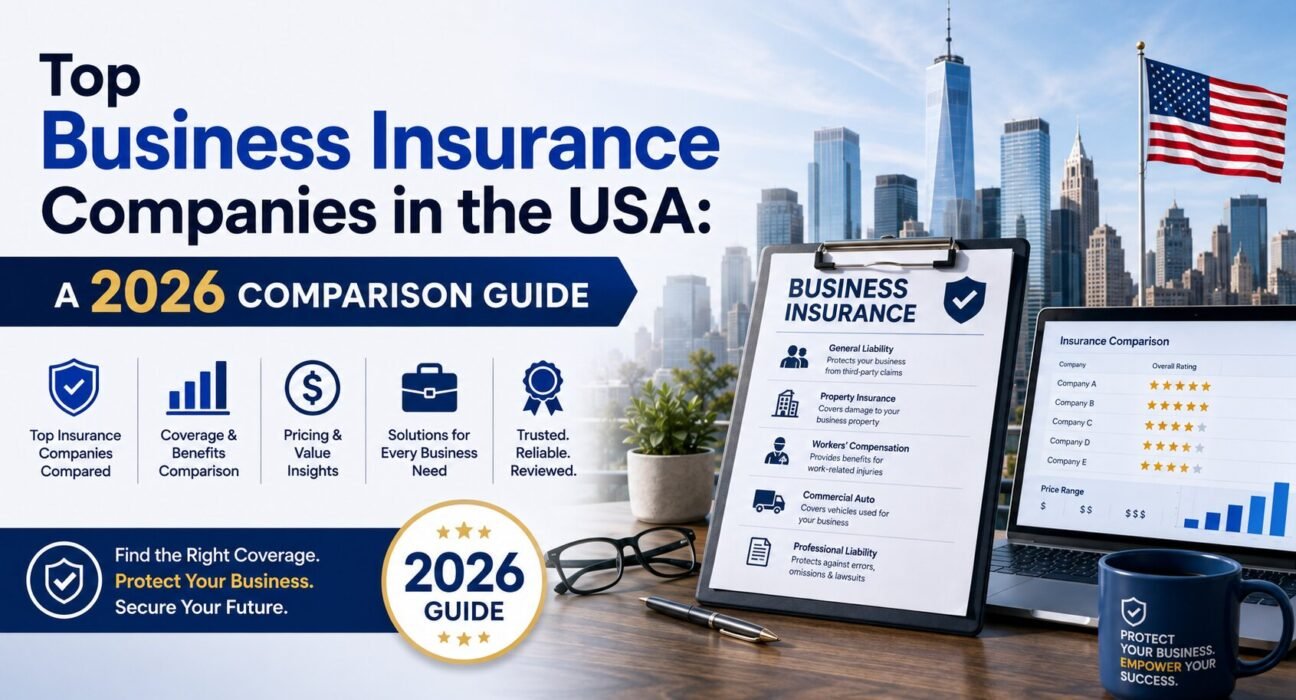
If you’re comparing the top business insurance companies in the USA, you’ve likely noticed the market is crowded with big, familiar names and specialized insurers alike. This guide breaks down some of the most established providers, what they’re generally known for, and how to think through choosing the right coverage for your business.
Why Business Insurance Matters More Than Ever
Small and midsize businesses face a wide range of risks — property damage, liability claims, employee injuries, cyberattacks, and lawsuits, to name a few. Without the right coverage, a single incident can wipe out years of profit or even force a business to close.
A few reasons business insurance has become a non-negotiable part of running a company:
- Many states legally require certain coverage, like workers’ compensation
- Clients and landlords often require proof of liability insurance before signing contracts
- Lawsuits and liability claims can be financially devastating without coverage
- Business interruption coverage can keep operations afloat after a disaster
- Cyber insurance has become increasingly important as data breaches rise
Top Business Insurance Companies in the USA
Here’s a look at some of the most established and widely used business insurance companies in the U.S. market, based on market share, longevity, and reputation across the industry.
The Hartford
Hartford is frequently ranked among the top choices for small business insurance, largely due to its broad range of coverage options and long track record of working with companies of nearly every size. It’s known for tailoring coverage to specific industries and offers strong support for businesses that are scaling up and need more comprehensive protection than basic digital-first insurers provide.
Known for: Small to midsize business coverage, workers’ compensation, and industry-specific policies.
Travelers
Travelers is one of the oldest insurance companies in the country, with roots dating back to the mid-1800s. It consistently ranks as one of the largest providers of commercial liability and nonliability business insurance in the U.S., and it primarily sells through a large network of independent agents.
Known for: Commercial liability, property insurance, and strong financial ratings.
Chubb
Chubb is well known in the business insurance space for serving companies that need higher coverage limits or more specialized policies, including businesses with complex risk profiles. It’s often mentioned alongside Travelers as one of the largest nonliability commercial insurers in the country.
Known for: Higher-limit commercial coverage and specialty business insurance products.
Liberty Mutual
Liberty Mutual has a long history in the business insurance field, and was started in the early 1900s to offer workers’ compensation coverage. Today, it has a variety of business commercial policies available which may offer different customer service experiences depending on the policy and location.
Known for: Workers’ compensation, business owner’s policies, and equipment breakdown coverage.
Nationwide
Nationwide has built a strong reputation in small business insurance, often ranking well in independent reviews for overall value and coverage flexibility. It offers a range of policies, including general liability, commercial property, and business owner’s policies (BOPs), making it a common choice for small and growing businesses.
Known for: Small business insurance and flexible policy bundling.
Hiscox
Hiscox has carved out a strong niche among independent contractors, freelancers, and microbusinesses, largely due to its streamlined online quote process and industry-specific policies. It’s frequently highlighted as a strong option for solo entrepreneurs and small service-based businesses that need coverage quickly.
Known for: Professional liability insurance and coverage for freelancers and small service businesses.
Progressive
While best known for auto insurance, Progressive is also the largest provider of commercial auto insurance in the U.S., holding a significant share of the business auto insurance market. For companies with delivery vehicles, fleets, or other commercial vehicles, it’s one of the most commonly used providers.
Known for: Commercial auto insurance for businesses with vehicles or fleets.
State Farm
State Farm is a familiar name in personal insurance, but it also offers meaningful business coverage, particularly for small and midsize businesses. It’s often chosen by businesses that already have a relationship with a local State Farm agent for personal insurance and want to consolidate their coverage.
Known for: Business owner’s policies and localized agent support.
How to Choose the Right Business Insurance Company
With so many strong providers in the market, picking the right one comes down to your specific business needs rather than simply choosing the biggest name.
Identify Your Business’s Specific Risks
A construction company and a graphic design studio face very different risks. Start by identifying what coverage is actually relevant — general liability, professional liability, commercial property, workers’ compensation, cyber insurance, or commercial auto.
Compare Multiple Quotes
Pricing and coverage details can vary significantly between insurers, even for similar policies. Getting quotes from at least three providers is a common recommendation for finding the right balance of coverage and cost.
Check Financial Strength Ratings
Independent rating agencies (IRAs) rate insurance companies for their financial strength and claim paying ability. A high rated insurer provides increased security of your claims will be processed in a dependable manner.
Look at Claims Handling Reputation
A policy is only as good as the claims process behind it. Look into customer reviews and independent ratings that specifically address how insurers handle claims, since this is often where businesses notice the biggest difference between providers.
Consider Bundling Options
There are a number of business insurance companies that provide a business owner’s policy (BOP), which is a package of general liability and commercial property policies. The bundled coverage is a typically lower price than buying the two policies individually. A BOP is a cost effective insurance solution for eligible businesses to get the coverage they need and may save on their total cost of insurance.
Common Types of Business Insurance to Know
- General liability insurance
- Commercial property insurance
- Workers’ compensation insurance
- Professional liability insurance
- Commercial auto insurance
- Cyber liability insurance
Common Mistakes Businesses Make When Choosing Insurance
- Underinsuring the business to save on premiums, which can lead to major out-of-pocket costs after a claim
- Not reviewing coverage annually, even as the business grows or changes
- Ignoring industry-specific risks, such as skipping cyber coverage for a business that stores customer data
- Choosing based on price alone, without factoring in claims service and financial strength ratings
Before making a decision, compare quotes from a few well-rated providers, check their financial strength ratings, and make sure the policy actually matches the risks your business faces day to day. A little research upfront can save significant stress — and money — down the road.
Frequently Asked Questions (FAQs)
What are the top business insurance companies in the USA?
Some of the most established providers include The Hartford, Travelers, Chubb, Liberty Mutual, Nationwide, Hiscox, Progressive, and State Farm, each known for different strengths depending on business size and industry.
How much does business insurance cost on average?
Costs vary widely based on industry, business size, location, and coverage type, so it’s best to get personalized quotes from multiple insurers rather than relying on a single average figure.
What is the most important business insurance for small businesses?
For most small businesses, the optimal starting point for coverage is general liability insurance followed by a business owner’s policy (BOP) and other coverage depending on industry-specific risks.
Does all businesses have to have worker’s compensation insurance?
Most states in the United States mandate the purchase of workers’ compensation insurance when you have employees because state laws differ, so you’ll want to review the regulations in your state.