


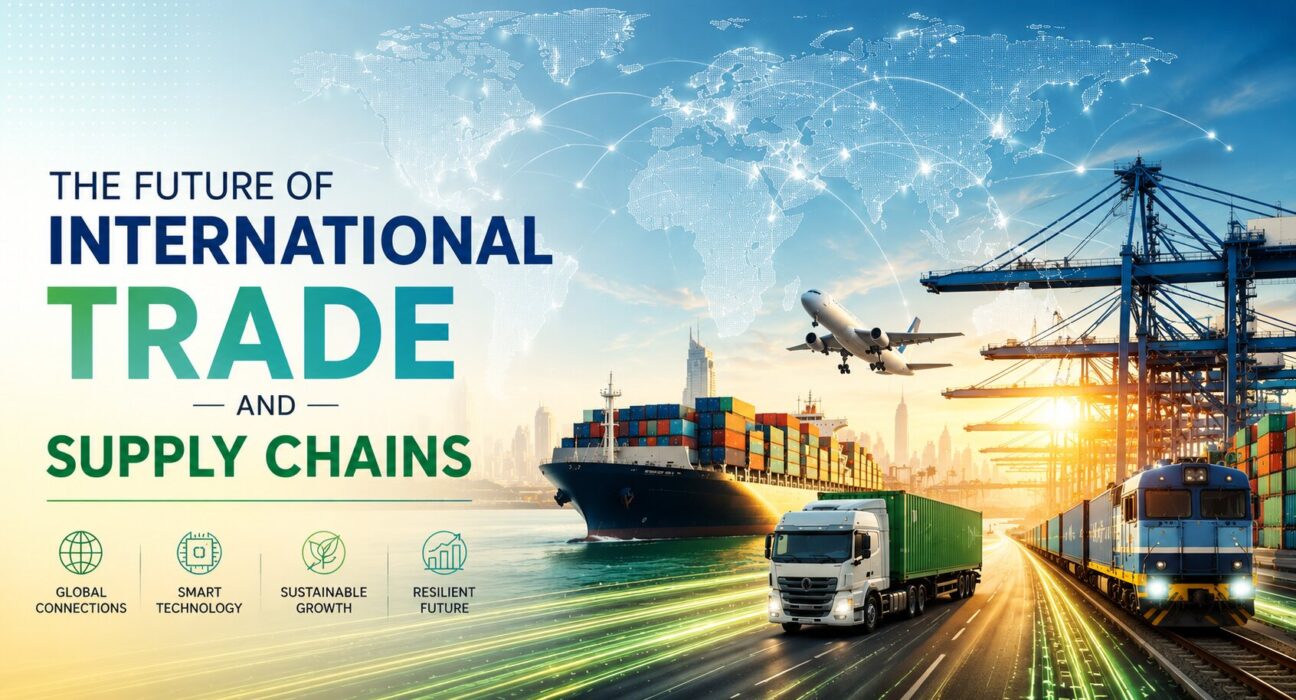
The business world is fast evolving with accurate results and fast decision making. Countries are getting more interconnected and businesses are no longer confined to selling products within their country. Technology, transportation and digital communication have revolutionized the way business is conducted globally in various areas such as business, trade and delivery of products. International trade and supply chain in the near future is likely to be more sophisticated, quicker and technologically stronger.
In today’s world, companies are not only concerned about production, but also at ensuring an efficient delivery, building robust international relations, and providing customer satisfaction. Supply chains are smartening up and companies are getting smarter in managing the product from manufacturing to delivery. In this blog, we will discuss the international trade and supply chains, what trends are dominating the Future of International Trade and Supply Chain and the importance of adapting to those trends.
Why are Businesses Interested in Trade and Supply Chain?
The global trade is a major factor in economic development. International markets play an important role for businesses to grow and generate more profits. And the supply chains help to ensure product safety and speed of travel between locations.
Over the past few years, businesses have come to understand the vital role of efficient supply chain systems. Business Performance can be impacted by delays, transport issues and market changes. That’s why technology is becoming more of an investment for businesses and they are planning to strengthen their supply chain and make it more reliable.
The future will be more about quickness, agility and smart decision making. Businesses with the ability to enhance their trade and supply patterns will successfully expanding their businesses into the market worldwide.
Major Trends Driving Global Trade and Transportation
There are various new trends affecting the international business today. These are helping companies to become more efficient and to minimise risk in their international activity.
The use of Advanced Technology
AI is enhancing supply chain management by businesses using AI, automation, and data analysis for improved supply chain management. These technologies facilitate the monitoring of goods, inventory management and minimisation of delays for companies.
Growth of E-Commerce
Businesses at any size have viewed online shopping, as a way to promote trade opportunities on a global basis. It is much easier for companies to sell their products internationally, than it was before.
Faster Transportation Systems
The shipping and logistics facilities are more efficient and enhanced transportation infrastructure enables companies to deliver products faster and satisfy customer needs.
Conduct business in a sustainable way
There are now various companies that are working to decrease waste and implement environmentally friendly packaging and better transportation techniques. Sustainability is a key element of trade system today.
Increased visibility in the supply chain
Now companies demand up-to-the-minute data on their products and shipments. Digital tracking systems enable businesses to keep track of each step of the process in the supply chain.
Diversification of Suppliers
Businesses are using more than one supplier to lower risks in the business and make it more stable, rather than relying on just one supplier or country.
Combining Automation with Human Expertise
Workforce is becoming more and more ‘tech-enabled’, surrounded by complicated software packages that are responsible for managing the entire lifecycle of a product. This change necessitates a huge re-skilling program but will lead to a significantly safer and more efficient working environment. The automation helps in reducing the human efforts, gives exact and clear result within seconds, without human errors. 6G networks and satellite Internet have also been introduce that helps in in tracking of international supply chain network with check all the remote locations of trading and stay connected and in touch with the delivery person to ensure safety and successful delivery.
Future Strategies for the Adaptation to the Global Markets
Flexible Operations
Highly flexible business environment is what the future will demand. Global market disruption require businesses to create resilient systems that are able to adapt to sudden changes in the market.
Digital Integration
By technology, transformation is a must. Cloud systems, automation and smart software helps companies to handle massive data and make a quick and more precise decisions.
Meeting Customer Demands
There is an increasing focus on timely and transparent service. To compete, companies need to improve their logistics and tracking systems to ensure speedier and improved real-time customer support.
Skill Development
The labor force needs to adapt to the changing technology. Digital systems and data management benefit from the investment in employee training, which means that the team can deal with today’s challenges in trade and logistics.
Regulatory Awareness
The rules and regulations set by the government and the policies of trade agreements often alter. Companies should keep themselves informed of the international rules and conduct and do proper market research to prevent legality or operational issues.
Collaborative Partnerships
Cooperation is key to the future of international trade and supply chain. Creating sustainable and stable partnerships with manufacturers, suppliers and logistic providers helps to build more reliable trade network.
Final Thoughts
The world business is moving towards technology and becoming more connected with automated things. With the use of digital tools and modern logistics systems, international trade and supply chains are become more smart, fast and efficient. Early adaption of these changes will give businesses enhanced opportunities for more growth and sustainability of Future of International Trade and Supply Chain.
There are various challenges also, but businesses need to be prepared for more innovation, adapting things and more customer-focused. With the changing nature of industries, the need for effective trade systems and supply chain management is only option to develop with time.